Tuesday, July 31, 2018

Huawei P20 Pro review:
 The Good The Huawei P20 Pro's three cameras snap amazing shots in low light. Its coolest colour will turn heads.
The Bad It
lacks wireless charging, and there's no headphone jack or expandable
storage. The auto camera settings don't always produce the best results.
The Bottom Line The
Huawei P20 Pro's groundbreaking low-light mode and stunning twilight
colour scheme make it a serious contender to Galaxy, iPhone and Pixel
phones. Sadly, you can't buy it in the US.
The Huawei Honor 10 is a speedy Android phone with a notch. Check out our review.I like things that stand out. It's why I've always been a fan of giraffes on an open plain and always fundamentally mistrusted those insects that disguise themselves as dead leaves.
It's also why I like Huawei's new top-end phone, the P20 Pro. It stands out for two reasons: its magnificently bizarre iridescent pink and blue "twilight" colour (you can also get it in pink gold, solid blue or black), and the fact that it has a total of three cameras on the back.
Those lenses combine to take superb outdoor shots in the daytime, but at night they take the best low-light images I've ever seen from a phone, especially when you're using Night Mode. (That's after I dismiss Huawei's auto-optimisation software, which can oversaturate shots.)
 Huawei P20 and P20 Pro aim to one-up Samsung
Inside the Huawei P20 Pro's psychedelic twilight shell is a metric tonne of top tech. The processor can't catch the Galaxy S9 for speed, but it will confidently power through any of your daily duties. The OLED screen -- complete with "optional" notch at the top -- makes everything you do on your phone pop, and the 4,000-mAh battery puts up one hell of a fight to keep it running throughout. The phone is water resistant, too, and passed CNET's two water-dunk tests.


It's a tough fight between the P20 Pro and the Galaxy S9 Plus ($839 at Sam's Club). The S9 Plus' superior performance, higher screen resolution and headphone jack make it the better all-around phone to go for (the P20 Pro gives you a dongle to put in its USB-C charger port if you want to listen on wired headphones). But the P20 Pro's eye-catching colour scheme and awesome night photography skills are enticing. So if that design and three-camera setup speak to you, you won't miss all that much by picking the P20 Pro -- if it sells where you live.
The P20 Pro won't sell in the US
The P20 Pro isn't available in the US and that's not likely to change any time soon. The US government banned the sale of Huawei networking equipment in
2012 over concerns that Huawei would spy on the US through its
products, especially its networking hardware. In February, the heads of
the FBI, CIA and NSA all expressed concerns over the company's phones as well.And while carriers and retailers have distanced themselves from the Huawei brand in recent months, some devices remain available at Amazon and elsewhere. No other country has banned the manufacturer, although Australia blocked Huawei from working on its national broadband network (though the phone is available Down Under).
Huawei has fought back by pointing out it has relationships with major carriers, corporations and consumers in more than 170 countries. "We have earned the trust of our partners across the global value chain," said a spokesman. Both the Huawei P20 Pro and P20 are currently on sale in Europe and Asia, and will be available in Australia soon.
Huawei P20 versus P20 Pro
So what about the regular Huawei P20? It's a completely different phone.It's smaller and has two rear cameras instead of three -- in other words, there's no telephoto lens. The P20's features are stepped down across the board. It uses a different camera sensor and screen technology, has a smaller battery with less RAM and it's more susceptible to water damage.
Still, the P20 is also a little cheaper at £599, which converts to about $850 or AU$1,100. It will be easier for many people to use one-handed. It still comes in that awesome blue-pink colour, and adds another gradient shade, called champagne gold. Scroll to the end of the review for the full specs comparison.

P20 Pro design brings the fun back to phones
I love the P20 Pro's duo-tone twilight colour scheme. As far as I'm concerned, it's the only colour worth getting. The way the blue blends into the pink is fantastic, almost like the colours of petrol on water. It takes me back to a time when phones didn't take themselves quite so seriously and dared to look different -- 2004's hot pink Motorola Razr, for example. It's like that one guy in the office who turned up wearing a tie-dye t-shirt and flip flops, while everyone else arrived in grey business suits.OnePlus teased a similar colour scheme on Twitter with the launch of the OnePlus 5 ($729 at Amazon.com). It was called "unicorn" and it was the fans' top vote when OnePlus asked which colour to make next. But OnePlus never went through with it. The OnePlus 5 eventually became available in black, white, red and gold, despite my numerous emails asking -- no, demanding -- that beautiful unicorn phone be put into production. Well, OnePlus's loss is likely Huawei's gain.


The downside is that the P20 Pro's backing is a fingerprint magnet, no matter which model you choose. Those cool colours will quickly be covered by a smeary layer of grease.
There's also no wireless charging. That's frustrating since the glass back would allow for it, unlike the previous model's metal casing. You also won't find a headphone jack, so be prepared to use either the included adapter dongle or make the switch to wireless headphones.
The P20 Pro's three cameras aren't a gimmick
Besides the bonkers colours, it's the three cameras on the back that make the Huawei P20 Pro truly exciting. They're arranged vertically down the left side of the phone's back. You have an astonishing 40-megapixel sensor (this is your main colour camera) and a 20-megapixel sensor that shoots only in black and white, but adds detail to shots. There's also an 8-megapixel telephoto lens that helps you zoom in close.


The automatic mode uses AI to quickly and accurately recognise a scene in order to optimise settings. It can identify a stand of trees as "greenery", for example. But I often found I didn't like the "optimisations" the phone makes by default.

Let's go back to the 8-megapixel telephoto lens. Using it gives you three times (3x) optical zoom (the biggest optical zoom available on a phone), or a five times (5x) zoom, which combines both optical and digital cropping. At 3x zoom, images remain sharp and at 5x, you only lose a little of that detail. If you want to snap a picture of an elegant swan in the park but want to stay safely out of pecking range, the 5x zoom will do the trick.
Saturday, July 28, 2018
Best New Features in 2018 Laptops

 The Good The imaginative Touch Bar streamlines work and spares snaps, and Apple has enhanced relatively all aspects of the more slender, lighter MacBook Pro, including a bigger touchpad, speedier segments and a compliment console. iPhone's Touch ID is helpful on the Mac, as well.
 The Bad You're paying a heavy premium for the Touch Bar, which bolsters just a constrained bunch of Apple applications for the time being. The USB-C-just ports mean conveying a sack loaded with dongles. The absence of top of the line illustrations or gigantic RAM choices in the 13-inch model may baffle photograph and video experts.
The Bottom Line Apple's brilliant, helpful Touch Bar makes it well worth going overboard on the progression up form of the streamlined 13-inch MacBook Pro.
Macintosh MacBook Pro with Touch Bar (13-inch, 2016)
Editors' note, June 8, 2017: At the current year's Worldwide Developers Conference, Apple gave its PC line a humble makeover with some refreshed segments - quicker, more great Intel processors in all cases, and more strong illustrations chips for the MacBook Pros. Something else, beside a RAM knock here and a slight value drop there, the 2017 Apple PCs (MacBook and MacBook Pro) are fundamentally the same as their 2016 ancestors, with similar fenced in areas, ports, trackpads and screens (see a full posting of changes and augmentations). Note that the 13-inch MacBook Pro from 2015 has been ended, however the 15-inch model of that vintage stays accessible for the individuals who need full-estimate USB ports.

The Apple MacBook Pro with Touch Bar (13-inch, 2016) survey, distributed in November 2016, takes after.
Mac 's taking huge swings with the new MacBook Pro . Some land square, some miss their check. Through and through, this is an excellent, ground-breaking machine that nearly everybody will need, however consider the exchange offs precisely.
This MacBook Pro is more slender and lighter than its antecedent, with a smoothed console and extended touchpad. It has a fresher determination of Intel processors, quicker glimmer stockpiling and a brighter Retina screen. The new MacBook Pro has likewise dropped all its heritage ports for Thunderbolt 3-fueled USB-C - a disputable move that expects you to purchase a truckload of dongles, yet additionally a move that some top of the line Windows workstations are following. Mac even tossed in the satisfying and exceptionally helpful TouchID unique mark sensor, imported entire hoard from the iPhone and iPad .
In any case, you know all that as of now. What you truly need to find out about is the new MacBook Pro's feature highlight: the Touch Bar, a minor 1cm tall touchscreen that replaces the capacity key line on the highest point of new Pro's console, and furthermore lifts the cost for this top of the line machine.
Macintosh mac book-master with-contact bar-13-inch-2016-61. j pg
Sarah Tew/CNET
We've as of now widely secured the essentials on the new 13-and 15-inch Pros, which were revealed at Apple's central command on October 27 and are accessible available to be purchased starting at early November. That incorporates our selective early hands-on with the new MacBook Pro, and additionally our audit of the passage level 2016 MacBook Pro model (which keeps its conventional capacity key line, and does exclude TouchID). Begin with both of those stories in the event that you need a comprehensive review of the plan changes, segment overhauls and port-related bargains of this MacBook Pro - which is basically the tenth commemoration version of the first 2006 MacBook Pro.
More on the MacBook Pro
Mac's astonishing strip demonstrate rehashes the PC console
Mac MacBook Pro (no Touch Bar) survey: The Retina Mac Book Air you've generally needed
Does the Mac still issue?
Jony Ive discusses putting the Apple 'contact' on the Mac Book Pro
The Mac and iPad aren't consolidating. Get over it
Here, nonetheless, we're concentrating on that Touch Bar. How can it function? Is it valuable? Would it be able to supplant the iPad-like touchscreen Mac we're not prone to get within a reasonable time-frame, as indicated by our ongoing elite meetings with Apple executives?

A tiny slice of iPad on your MacBook
The Touch Bar is a long, thin OLED touchscreen that sits over the console, supplanting the conventional F1-F12 keys, and in addition the escape key and power catch. On the far right end of the Touch Bar is a unique mark peruser, like the one found on the iPhone, which empowers Touch ID and Apple Pay for secure framework log-ins and online installments.As a matter of course, the Touch Bar shows framework instruments, including screen brilliance and volume control. Be that as it may, when utilizing select applications (until further notice for the most part Apple-made applications, for example, Safari, yet more outsider help is headed), new logical charges show up on the Touch Bar, and the framework devices move up into a consolidated form on the correct side of the strip. You can even now get to volume and shine controls, however to get the full default rundown of summons back, you'll need to tap on a little bolt to extend it (which additionally conceals the logical orders for the application you're right now utilizing).
Macintosh macbook-professional with-contact bar-13-inch-2016-39.jpg
Sarah Tew/CNET
Having invested some genuine hands-on energy with the Touch Bar variant of the new 13-inch MacBook Pro, and testing its capacities with an extensive variety of applications, it feels like a device that can upgrade your processing knowledge, however won't reform it. It does not as much as a full touchscreen may, however Apple has figured out how to utilize it to eliminate keystrokes, streamline errands and include extra levels of fine control.
I very quickly began to discover seemingly insignificant details it improved the situation than conventional console and touchpad input
Some who've seen the Touch Bar just from a remote place call it a trick, however I very quickly began discovering seemingly insignificant details it improved the situation than conventional console and touchpad input, and after a brief timeframe I was utilizing a bunch of these Touch Bar works naturally, without contemplating it.
In the event that you invest a touch of energy giving it a shot in various applications, you'll wind up with possibly about six or so alternate ways you cherish the Touch Bar for, while your processing knowledge stays generally unaltered.
That makes it harder to legitimize as a costly extra to the new MacBook Pro line. The minimum costly Touch Bar framework is the one surveyed here, at $1,799 (£1,749 or AU$2,699). That is a $300 hop over the more standard $1,499 passage level MacBook Pro (£1,449 or AU$2,199), which does not have the Touch Bar. Be that as it may, notwithstanding the Touch Bar, this rendition additionally has a quicker processor (a 2.9GHz Intel Core i5, versus a 2.0GHz Core i5), imperceptibly better incorporated Intel designs (Iris 550 versus Iris 540), and it pairs the quantity of included USB-C Thunderbolt ports to four. So in any event you're getting more for your $300 than simply the Touch Bar.

The new MacBook Pro has a shallower butterfly console.
Sarah Tew/CNET
Beforehand, the section level 13-inch MacBook Pro cost $1,299 (£1,249 or AU$1,999), however that model had a large portion of the capacity of these new ones, just 128GB. Note that in case you're kicking yourself for passing up a major opportunity for the more established Pro (which was great in its own right), with its lower beginning cost and more extensive assortment of ports, Apple is as yet offering a solitary 13-inch and single 15-inch 2015-period design, in any event for the time being.
Macintosh MacBook Pro with Touch Bar (13-inch)
Cost as surveyed $1,799, £1,749 or AU$2,699
Show estimate/determination 13.3-inch 2,560 x 1,600
PC CPU 2.9GHz Intel Core i5
PC Memory 8GB 1866MHz LPDDR3
Illustrations Intel Iris Graphics 550
Capacity 256GB PCIe SSD
Systems administration 802.11ac remote, Bluetooth 4.2
Working framework macOS Sierra
One bar, numerous forms
The Touch Bar is loaded with potential outcomes, however like the spreading menus inside menus it should supplant, a portion of its capacities can stay covered under extra taps and swipes, contingent upon which applications you utilize it with. There's solitary so much one can fit into a 2,170x60 show.
Genuine directions for how to utilize the Touch Bar are meager. Rather, it's dependent upon you to eyeball the new fasten that pop logically in each upheld application and make sense of how to utilize them. As a rule, it's exhibited consistently, however some on-screen catches encapsulate layers, and exploring further in and after that moving pull out isn't generally natural (as on account of Photos, Apple's photograph sorting out and tweaking application). In different cases, the Touch Bar catches are an ideal refining of the most imperative capacities in an application, (for example, Safari or Messages), and simple to get and utilize immeidately.
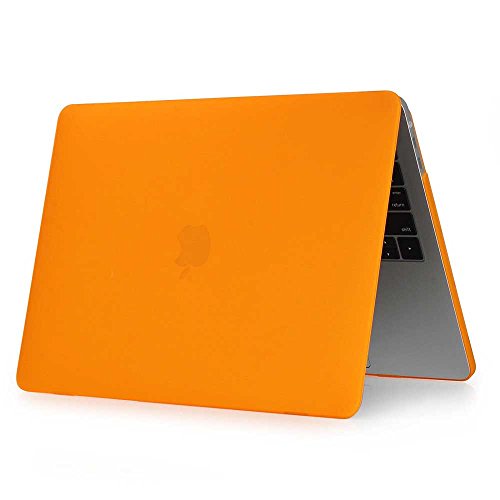
Each Touch Bar arrangement of charges has its own visual and authoritative dialect. That is sufficiently simple to interpret when just Apple-made projects are bolstered, yet we'll need to sit back and watch how other programming producers handle the Touch Bar. Windows PC producers have battled for quite a long time with how to legitimately show restrictive programming interfaces, requesting that buyers learn and relearn new practices for applications they may as of now be comfortable with, or for projects and highlights that may vanish or change fundamentally in the following form.
Adobe is one organization you truly need to watch in this space. A key accomplice for Touch Bar bolster, Photoshop will include Touch Bar controls in the not so distant future. It'll be extremely intriguing to perceive what they do, and if long-lasting Photoshop clients take to it. That is particularly critical in light of the fact that Adobe is an ace of extraordinary ease of use and stage congruity. (For instance, I took a solitary semester Photoshop instructional exercise course as a school student route back in the 1990s. All
Subscribe to:
Posts (Atom)